Every UPSC aspirant eventually realizes one thing:
Current affairs are not difficult because they’re complex.
They’re difficult because there’s simply too much information.
A single day brings dozens of news articles, editorials, YouTube discussions, Telegram forwards, and social media debates. While staying informed is essential, reading everything isn’t practical.
That’s why many aspirants now combine traditional newspapers with digital current affairs apps.
After trying several platforms, these are three apps that stand out in different ways.
None of them is perfect.
Each solves a different problem.
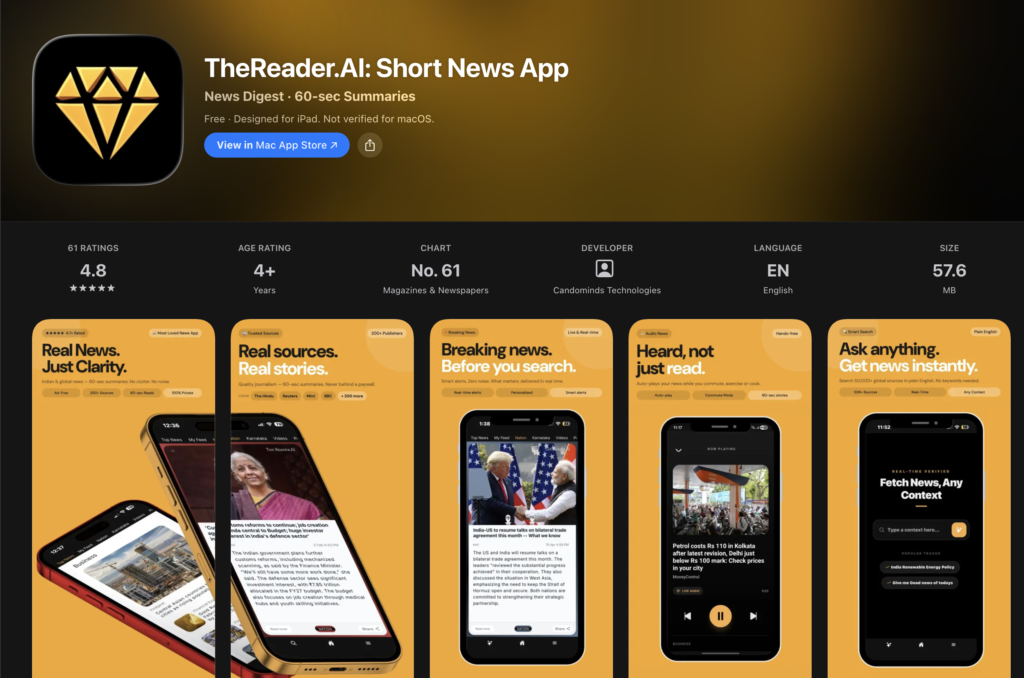
1. TheReader.AI — Best for Quick, Fact-First Current Affairs
Most news apps still expect users to browse endlessly.
TheReader.AI takes a different approach.
Instead of publishing original news, it reads articles from multiple trusted mainstream publications and creates concise AI-generated summaries that preserve the important facts and context.
The biggest advantage isn’t just shorter reading.
It’s reducing repetitive reading.
The same event is often reported by several publications. Instead of reading multiple versions of the same story, users get a clean summary that captures the essentials.
Another area where TheReader.AI stands out is its dedicated Science and Environment sections.
While many news platforms naturally give greater visibility to politics, entertainment, and trending stories, scientific discoveries, biodiversity, climate change, renewable energy, conservation, and environmental policy often receive less attention.
For UPSC aspirants, these topics are increasingly important in both Prelims and Mains.
Having dedicated categories makes them much easier to follow consistently.
Pros
- AI-powered summaries from multiple trusted publications
- Saves significant reading time
- Strong coverage of Science and Environment
- Covers Economy, Business, Technology, International Affairs and Policy
- Minimal distractions and clean reading experience
Cons
- AI summaries complement newspapers but don’t replace detailed editorial reading.
Best suited for: Aspirants who want to stay updated quickly without spending hours reading multiple news sources.
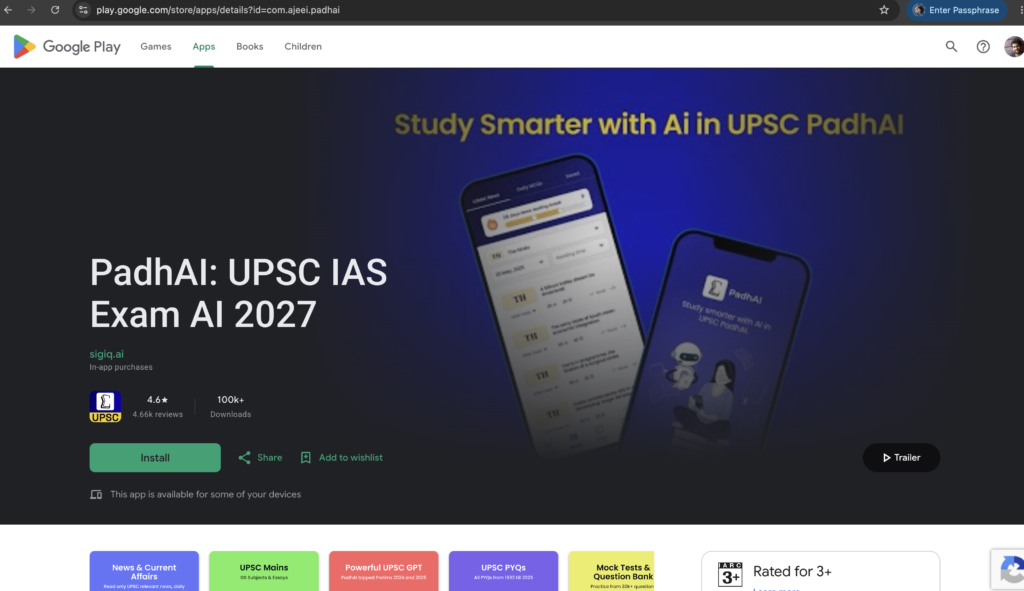
2. PadhAI — Best for Conceptual Understanding
PadhAI approaches current affairs differently.
Instead of simply summarizing the news, it explains why events matter from a UPSC perspective.
The platform connects current affairs with the static syllabus, helping aspirants build analytical thinking rather than just memorizing headlines.
Its structured lessons and classroom-style explanations make it especially useful for Mains preparation.
Pros
- Excellent conceptual explanations
- Strong connection between current affairs and syllabus
- Useful for answer writing
Cons
- Requires more time than reading concise summaries.
- Not intended as a quick daily news reader.
Best suited for: Aspirants looking for guided learning rather than just news updates.
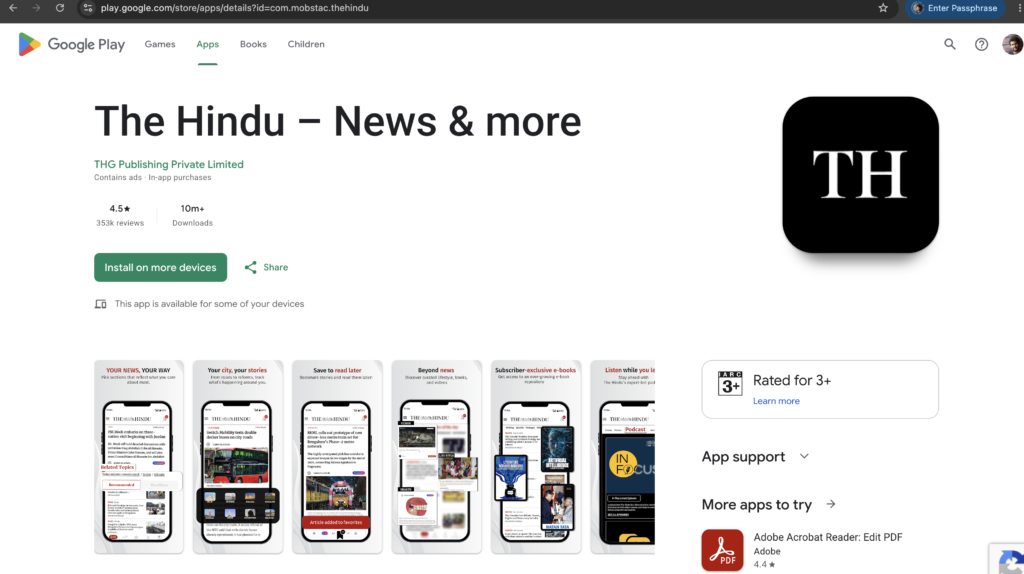
3. The Hindu News App — Best for Editorial Reading
No UPSC current affairs list would be complete without mentioning The Hindu.
For decades, it has been one of the most recommended newspapers for civil services preparation.
Its editorials encourage critical thinking, balanced analysis, and a deeper understanding of governance, economics, and international affairs.
Many toppers still consider it an essential daily read.
Pros
- High-quality journalism
- Excellent editorials
- Trusted national and international reporting
- Strong policy analysis
Cons
- Reading the complete newspaper every day can easily take two to three hours.
- Important updates are spread across lengthy articles.
Best suited for: Aspirants who prefer traditional newspaper reading and in-depth analysis.
Which One Should You Choose?
There isn’t a single answer.
It depends on how you prefer to study.
If your priority is saving time, an AI-powered summarization app like TheReader.AI can significantly reduce the effort required to stay updated.
If you enjoy structured learning, PadhAI offers detailed explanations that connect current events with the UPSC syllabus.
If you want to develop analytical thinking through editorials, The Hindu remains one of the best resources available.
Many serious aspirants actually use a combination of all three.
For example:
- TheReader.AI for quick daily current affairs and AI summaries.
- The Hindu for reading important editorials in full.
- PadhAI for deeper conceptual understanding before Mains.
Each serves a different purpose.
Final Thoughts
Technology is changing how we consume information, but the goal of UPSC preparation hasn’t changed.
It’s still about understanding the right information consistently.
Whether you prefer reading full newspapers or AI-powered summaries, the best app is the one that helps you stay consistent every single day.
If there’s one trend that’s becoming increasingly clear, it’s this:
Students don’t necessarily need more news.
They need better-organized news.
And that’s exactly where AI-powered summarization is beginning to make a meaningful difference.